Research
Is vibe coding a threat to Shopify? Look behind the storefront.
On Shopify’s February 11, 2026 earnings call, RBC analyst Paul Treiber asked whether AI tools were making custom-built alternatives more attractive to merchants. The question gets at an important distinction: when another tool builds a merchant’s website, who supplies the commerce infrastructure underneath?
Using Village’s web data and agent, we examined websites linked to Lovable, Replit, Base44, Bolt and v0. Shopify catalog data appeared in every builder group. Shopify also appeared at linked storefronts and checkout destinations.
Lovable has the largest detected footprint across the available popularity bands
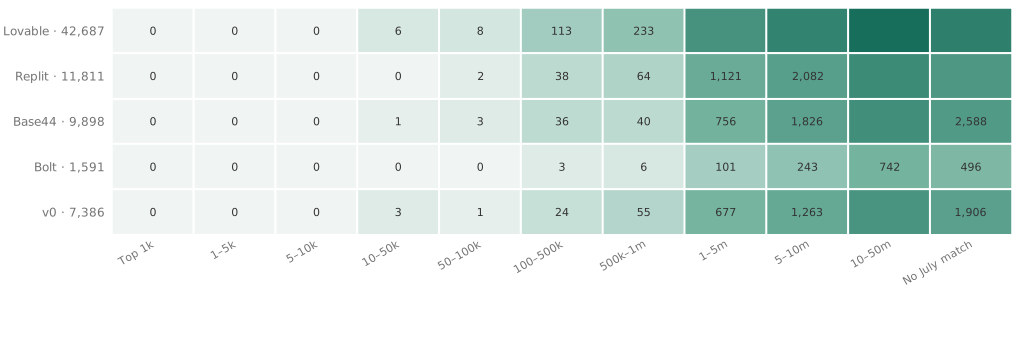
Village identified 73,341 unique hostnames across the five builder groups.
For the store and infrastructure analysis below, we selected 500 hosts per builder from the highest available popularity bands. Equal cohort sizes still have different popularity profiles: Lovable contributes 360 top-million hosts, compared with 104 for Replit, 83 for v0, 80 for Base44 and nine for Bolt. The selected Bolt cohort extends into the 10–50 million band; the others end in the 1–5 million band.
Lovable has the highest proportion of online stores
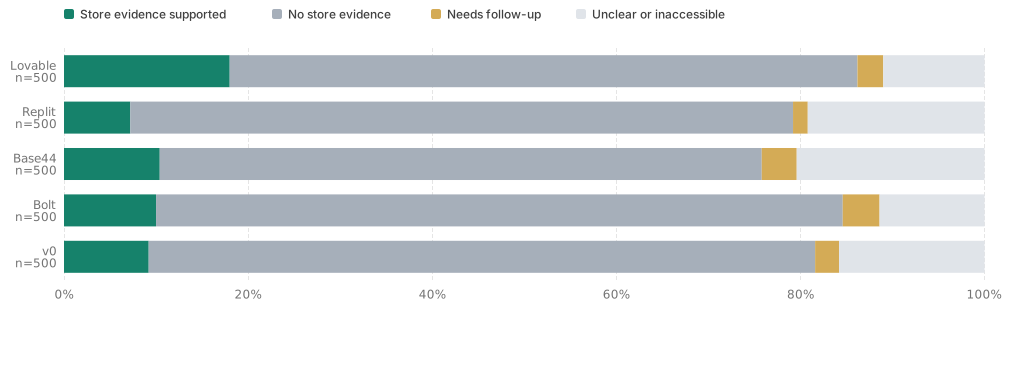
We used GPT-5.6 Sol to classify captured website content, then reviewed purchase-route edge cases. An online store needed identifiable physical or digital goods and a direct order route.
Lovable’s stores also have the highest Shopify participation
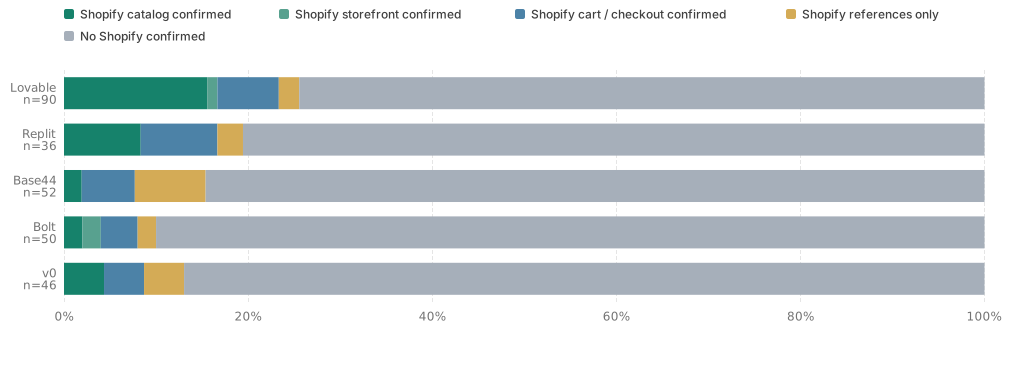
Two factors may help explain Lovable’s higher share: its integration launched in October 2025, over seven months before Replit’s, and it supports existing Shopify stores.
If stores aren’t using Shopify, what are they using?
The next two graphs combine the five cohorts, counting each hostname once, and cover identified stores without a confirmed Shopify catalog, storefront or checkout role.
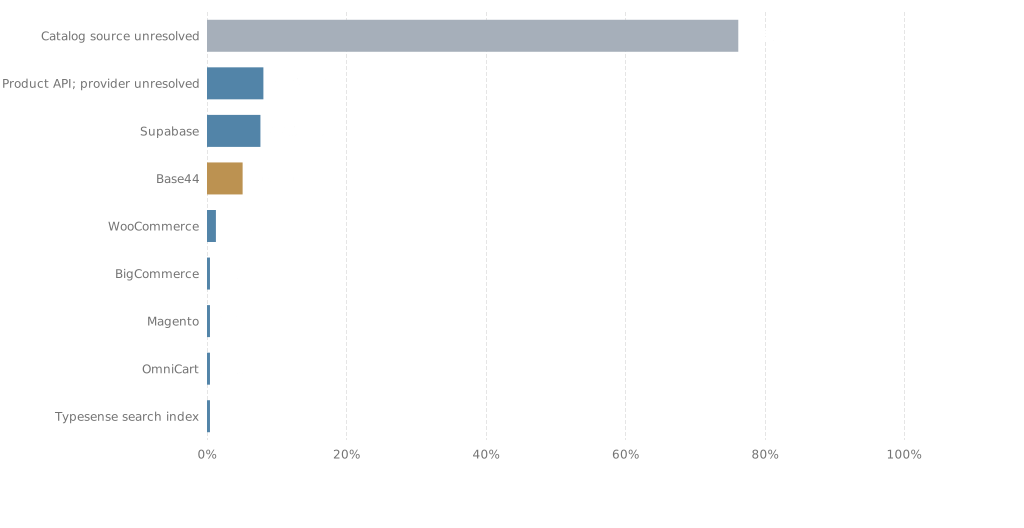
Norsa Pharma and Shuks Varieties use WooCommerce catalogs. At Shuks, product IDs, SKUs and prices on the storefront match its WooCommerce backend, while its checkout offers payment by bank transfer. Catalog supply, storefront design and payment can therefore come from different parts of the stack.
At Hakka & Kabab, Supabase serves a food-truck menu with item names and prices. At JDM, it serves automotive-electronics product records. These stores illustrate another approach to catalog delivery: a general-purpose database supplies the merchandise that the builder-linked storefront displays.
Compassion Mobility serves named, priced products through Base44’s own data service. Sobianek uses a Typesense search index to deliver product records to its storefront. These identify the layer serving the catalog; imported product identifiers and a search index do not, by themselves, reveal the upstream commerce system.
Digital-goods sellers can turn to specialist checkout platforms
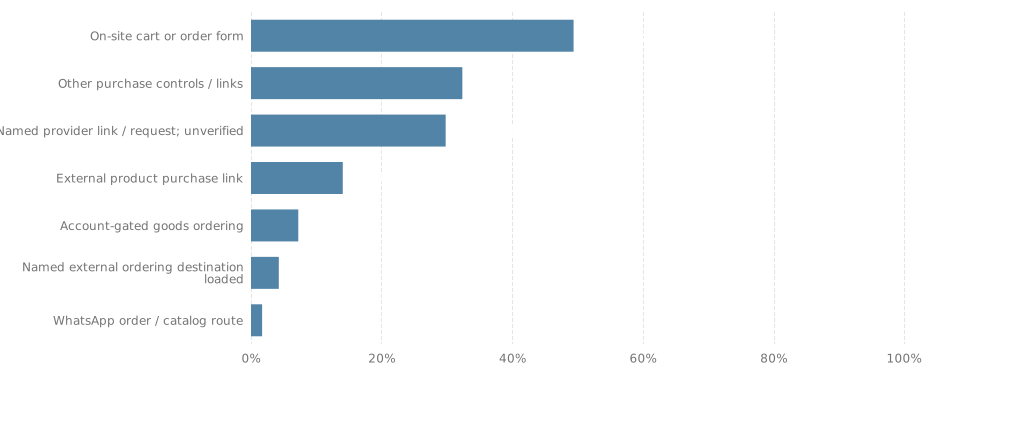
The merchandise mix also differs: about three in ten identified stores without confirmed Shopify sell only digital goods, while none of the identified stores with confirmed Shopify participation did. El Mecánico de Autos, for example, sends buyers of an automotive-manual bundle to Hotmart checkout. This suggests that part of the contrast with Shopify reflects what these stores sell, as well as how they build their websites.
Physical goods dominate Shopify catalog-connected sites across the five builders
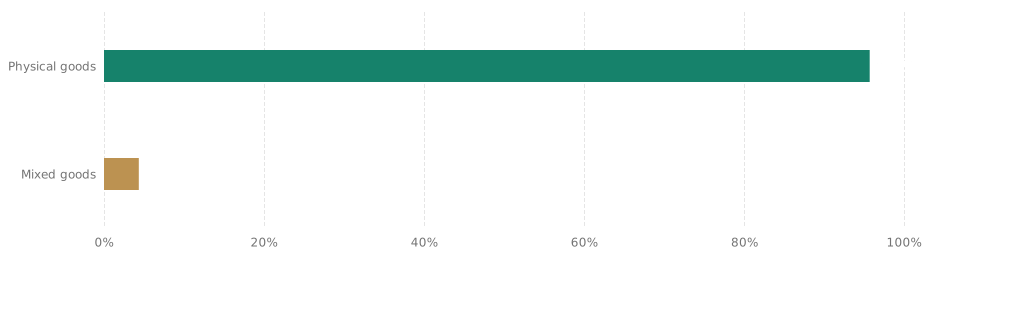
This graph covers all 23 catalog-confirmed hosts, including secondary shops and two hosts whose store eligibility or purchase route remains unresolved. Sites confirmed only through storefront or checkout evidence are excluded.
Together, the findings sharpen the question raised on Shopify’s earnings call. A different website builder can coexist with Shopify product infrastructure. Among the sites where that connection was observable, physical goods dominated. Among stores without confirmed Shopify, we found a mixture of identifiable catalog services, external ordering platforms and unresolved infrastructure.
How we built this
This study draws on Village’s web dataset, which captures more than 20 million domains. Most technographic datasets reduce each site to a list of detected tools. Village keeps the raw evidence behind those labels, including page content, the requests a site makes as it loads, and the data those requests return, so our agent can interpret it against your question.
Build your own signals on this data. Define what matters to your research and get alerted when it moves.
Proprietary signals from any source. Build pipelines with Village’s agent that gather data from the websites, APIs and documents your research depends on.

%22%20transform%3D%22rotate(180%20800%20450)%22%3E%0A%20%20%20%20%20%20%3Cpath%20fill%3D%22%23ba746a%22%20d%3D%22M%20-300%20-250%20H%20434%20C%20443%20183%2C%20478%20657%2C%20530%201150%20H%20-300%20Z%22%20%2F%3E%0A%20%20%20%20%20%20%3Cpath%20fill%3D%22%23f2c4ae%22%20d%3D%22M%20791%20-250%20C%20504%20250%2C%20873%20650%2C%20586%201150%20H%201151%20C%201438%20650%2C%20984%20250%2C%201271%20-250%20Z%22%20%2F%3E%0A%20%20%20%20%20%20%3Cpath%20fill%3D%22%23d78c78%22%20d%3D%22M%201900%2053%20C%201075%20489%2C%201806%20672%2C%20605%201150%20H%201900%20Z%22%20%2F%3E%0A%20%20%20%20%3C%2Fg%3E%0A%20%20%20%20%3Crect%20width%3D%221600%22%20height%3D%22900%22%20filter%3D%22url(%23grain)%22%20opacity%3D%22.08%22%20style%3D%22mix-blend-mode%3Asoft-light%22%20%2F%3E%0A%20%20%3C%2Fsvg%3E)